
Your Change with Thanks
- but nobody cared a farthing when its reign came to an end
Amoret Tanner writes about a little-known but fascinating area of ephemera. The handling of farthing coins was considered vulgar by genteel customers, even with gloved hands. Two principal solutions were found: change packets, where the coin was concealed in a pre-printed envelope, and change pin-papers, where the coin was replaced by pins. The illustrations are from the author’s collection.
On 1 January 1961 Queen Elizabeth II issued a rare Royal Proclamation under Section 11 of the Coinage Act, 1870, directing that farthings would no longer be legal tender. Britannia had ruled the coin reverse until 1937 when she was replaced by the perky little wren, and the farthing is now remembered only by social historians and numismatists. A decade later on 15 February 1971 Britain changed to decimalisation for its currency. Not only did this change the coinage in our pockets but our spoken language too was soon to lose nicknames for coins.
The historical birth of the farthing coin was in 1272 when the small silver penny was marked with a cross so that it could be broken into fourths, fourthings or farthings. The more modern version in copper arrived in 1672 and the final bronze example was struck in 1860. There is a lasting affection for the small coin and as a subject it appeared regularly in national newspapers in the 1960s when elderly correspondents reminisced in letters to the editor on what they could buy for a farthing 60 years earlier. Their choice of items reflects their hungry youth which allowed the coin to buy a currant bun or a liquorice bootlace, a farthing’s worth of milk in a paper screw bag or a ‘fardensworf o’ suckers.’ Equally regularly appeared letters of irritation about pricing which required a farthing change for a bill marked eight-and-eleven-three. Sellers used this for the same reason that today something priced at £9 will be marked as £8.99 on the assumption that it will be considered a bargain. Prior to 1914, instead of the farthing change the customer was given a small envelope clearly marked Your Change with Thanks (1), (2) and it is due to such ephemera that one can now piece together a little-known shopping activity of the late 19th and early 20th century.
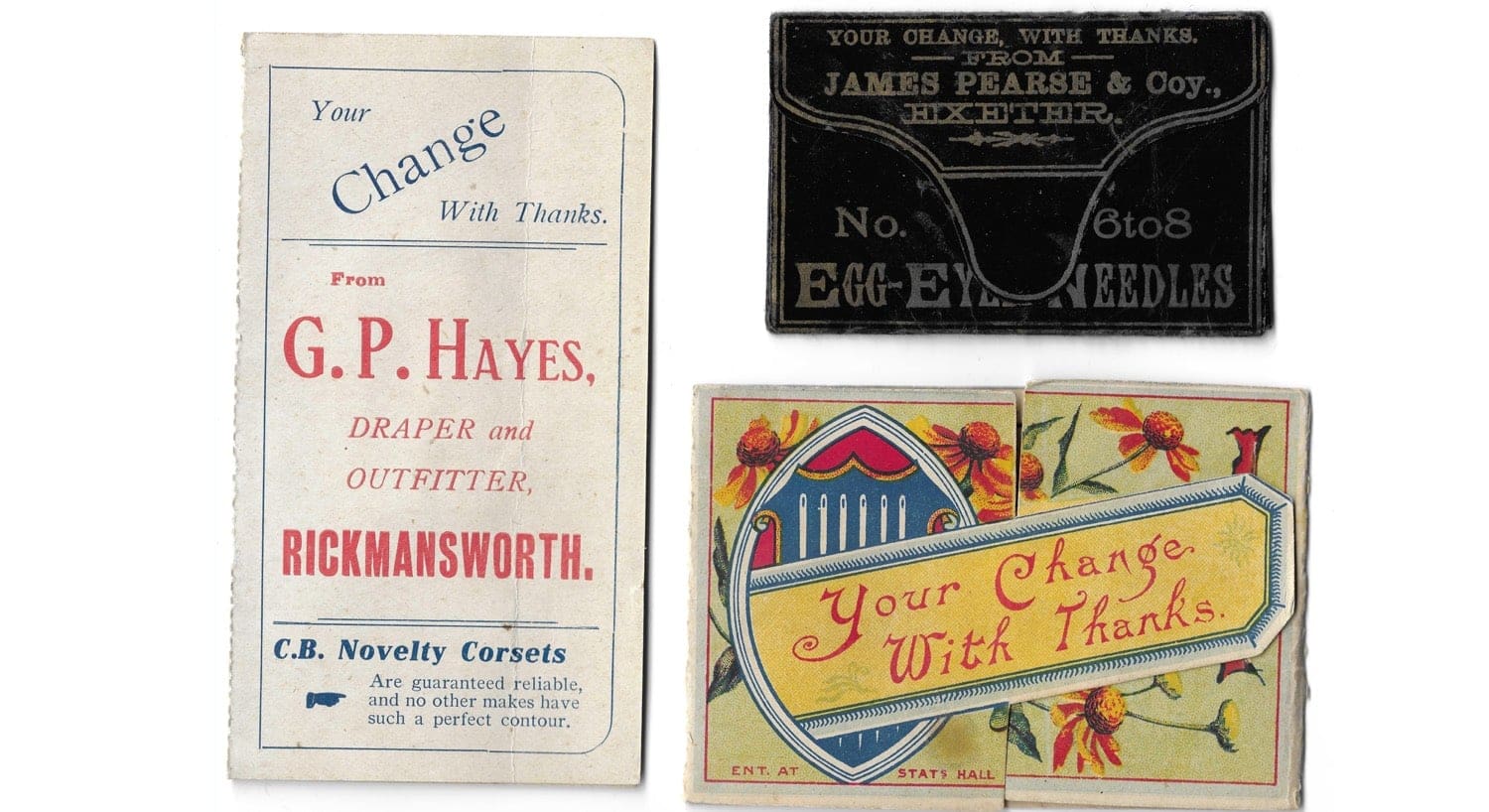
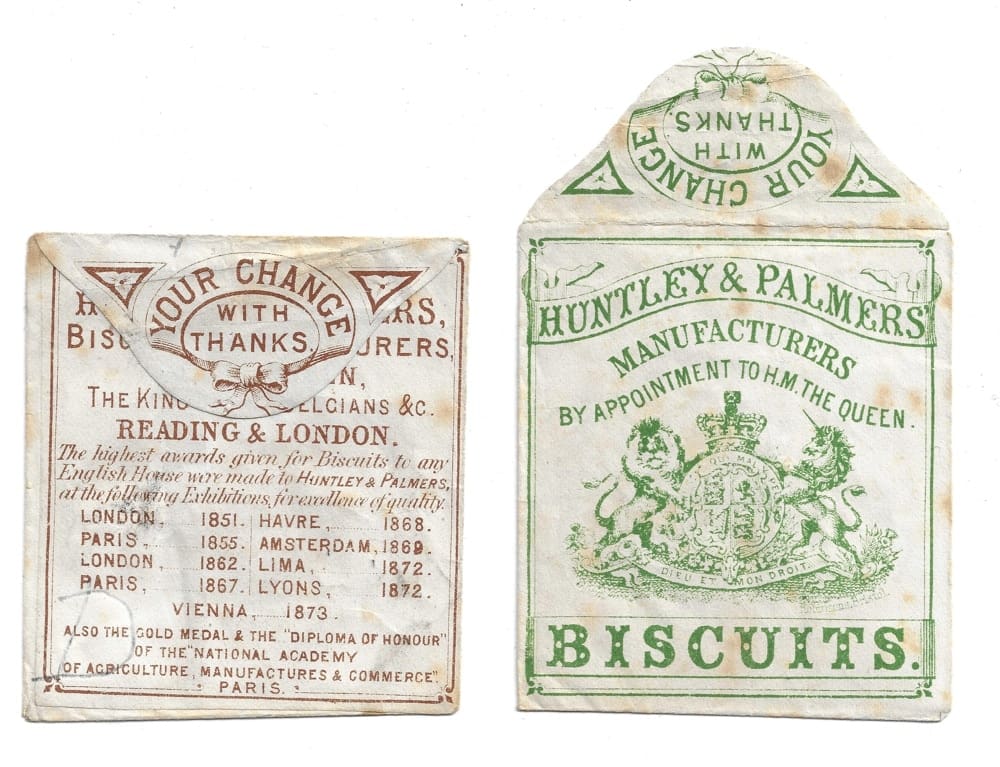
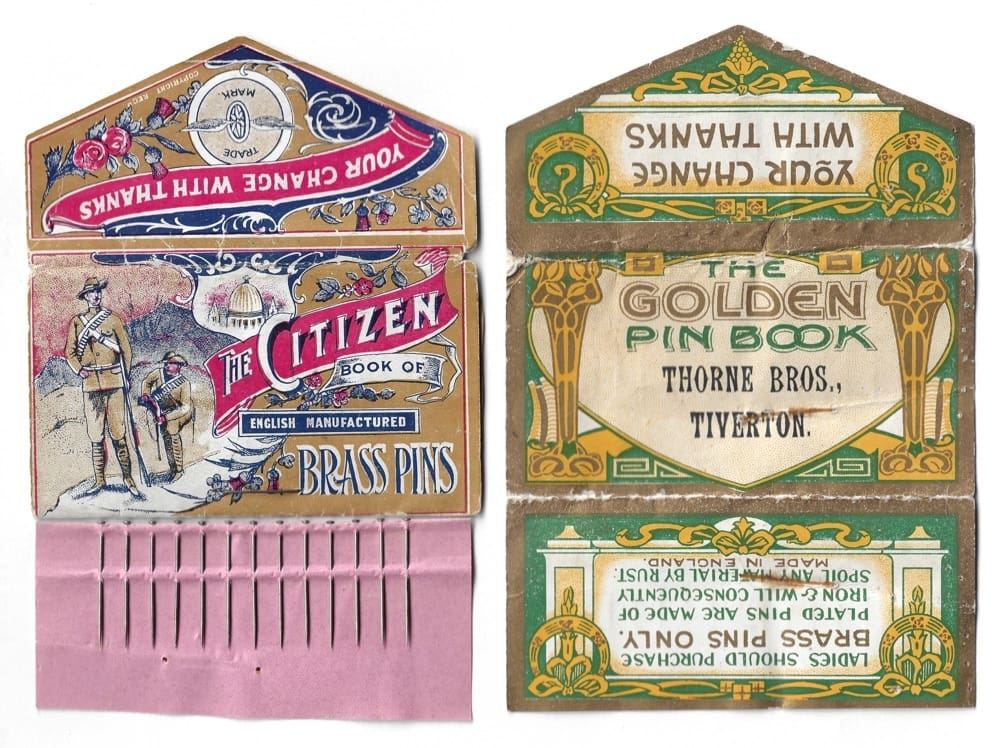
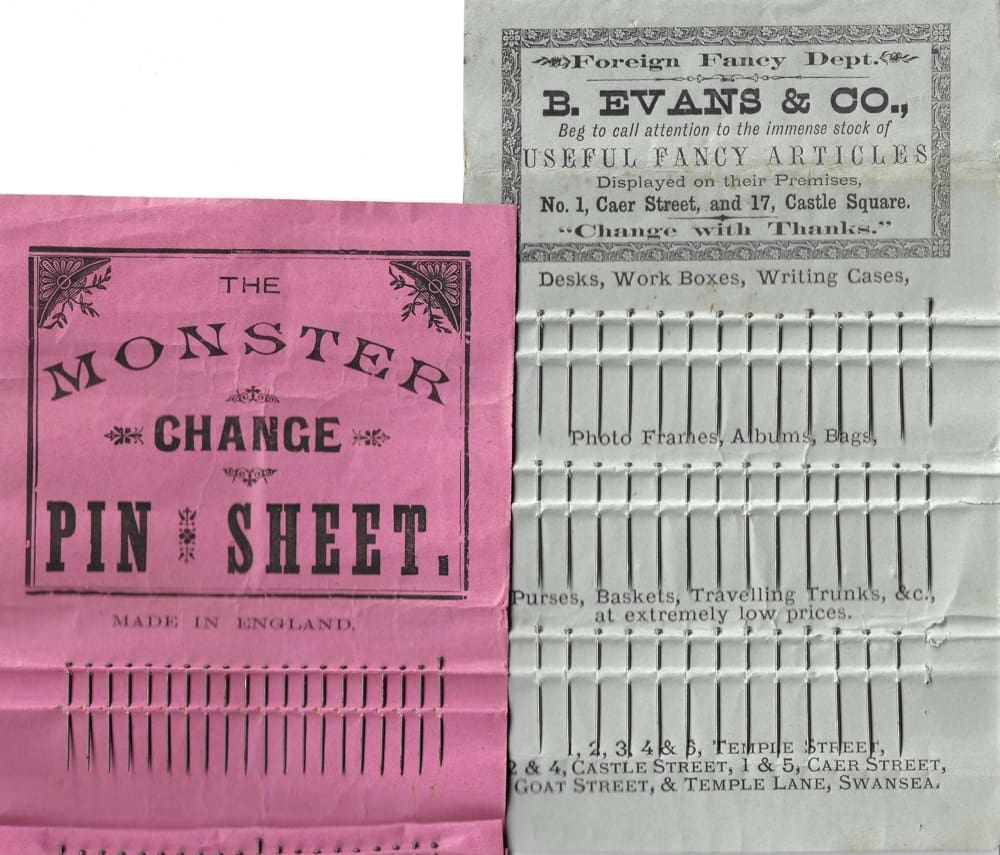
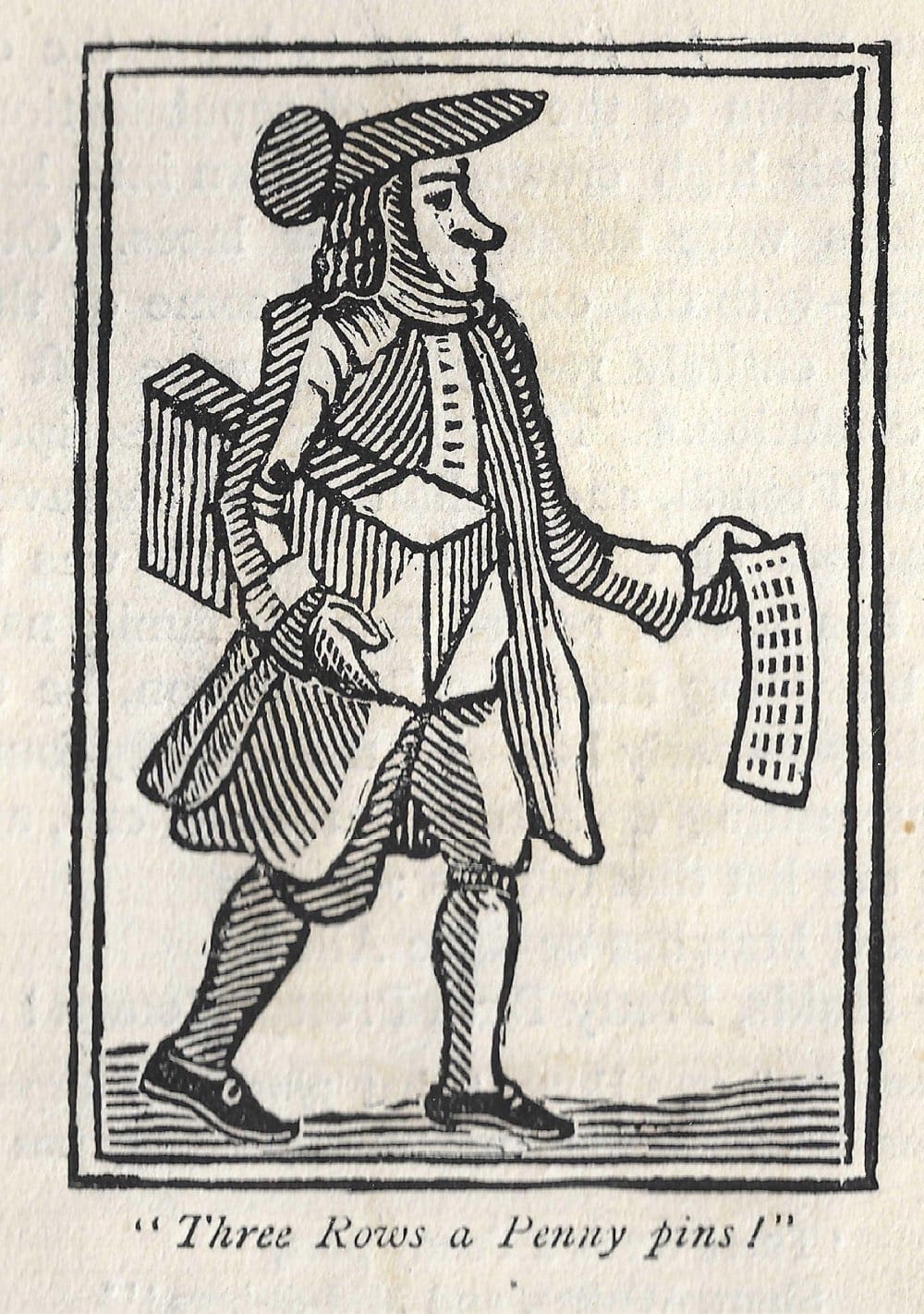
These elusive items are divided by The Encyclopedia of Ephemera into Change packet and Change pin-paper which offers different uses for the items described. Like much ephemera, there is not necessarily consistency in how it was used and there is virtually no evidence or contemporary reference to this for the change packets shown. Alison Adburgham in her pioneering books on the history of retail shops and shopping explains in her reference to Morley’s trade catalogues that shopkeepers actually made a profit from giving a paper of pins (3), (4) instead of the required coin. An alternative was the Farthing Novelette, a poorly printed eight-page item, also listed by Morley. In use from biblical times, the importance of pins is largely forgotten today. Available from the innumerable street sellers (5), men and women, until the arrival of factory-made dress fasteners in the 19th century, pins were an essential part of costume and would have been a welcome gift.
Advertising on the change packets lists the shops dispensing them as primarily milliners, drapers, haberdashers and costumiers, and stock offered included mantles, calicoes and fancy articles. The word ‘millinery’ has changed in use over time and in the 19th century included the many small domestic items that were imported from Milan, Italy. The use of the smart word ‘costumier’ inferred that a dressmaker was available in house. Needles were an essential sewing tool both above and below stairs and names of leading firms such as Abel Morrall, Kirkby Beard and John James appear in the advertisements. The workshop processes of needle making such as stamping, hardening, finishing and papering, are shown on the rare packet Morris & Yeoman registered for copyright in 1898 (6).

From the early 18th century onwards, the making of steel needles became increasingly important both in the quantity required and the sophistication of the end product. Water power was the basic necessity and gradually the forges for needle makers became centred on the Midlands with towns like Redditch, Worcestershire, recording over 2,500 men, women and children employed in the 1850s.
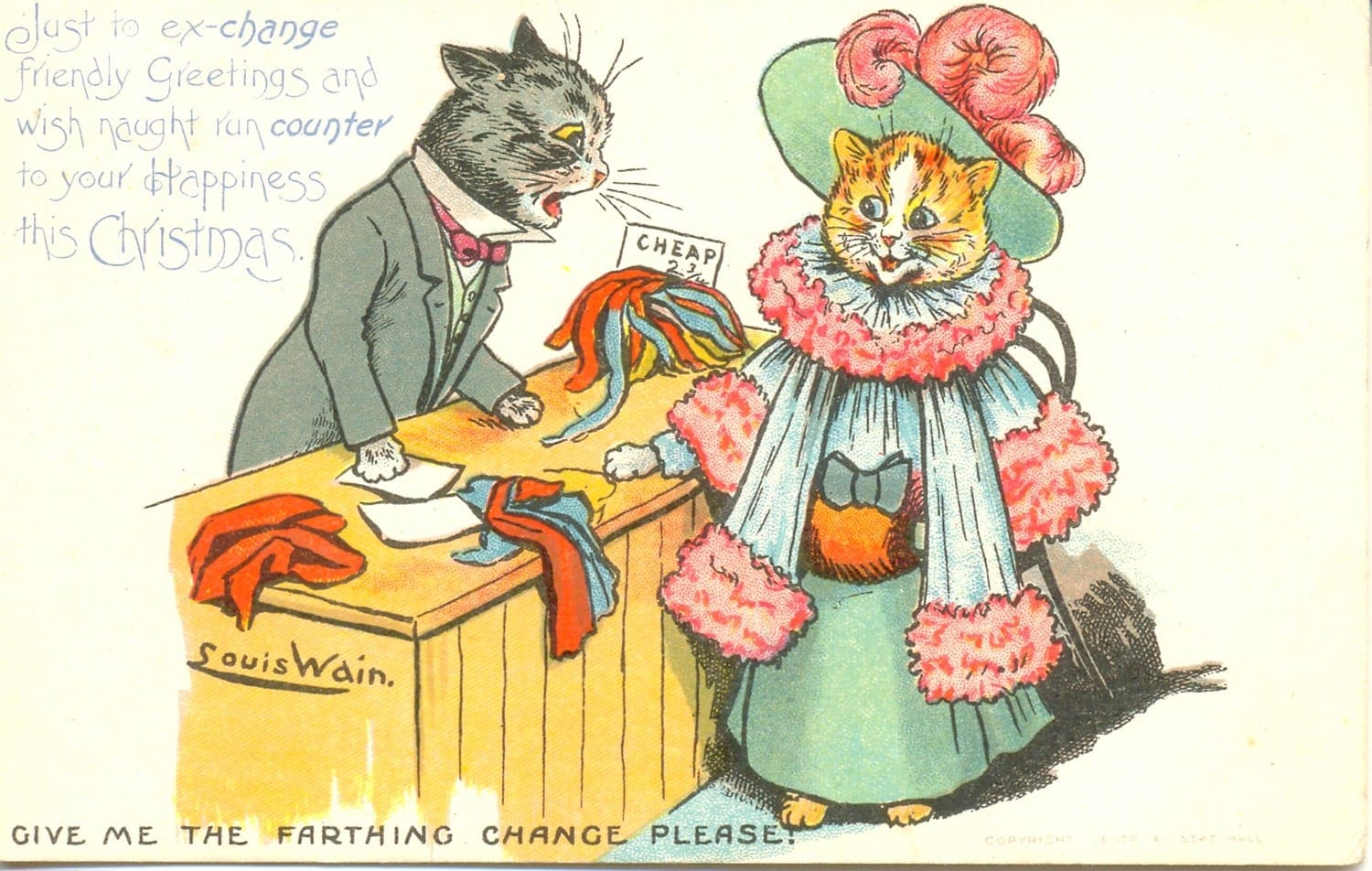
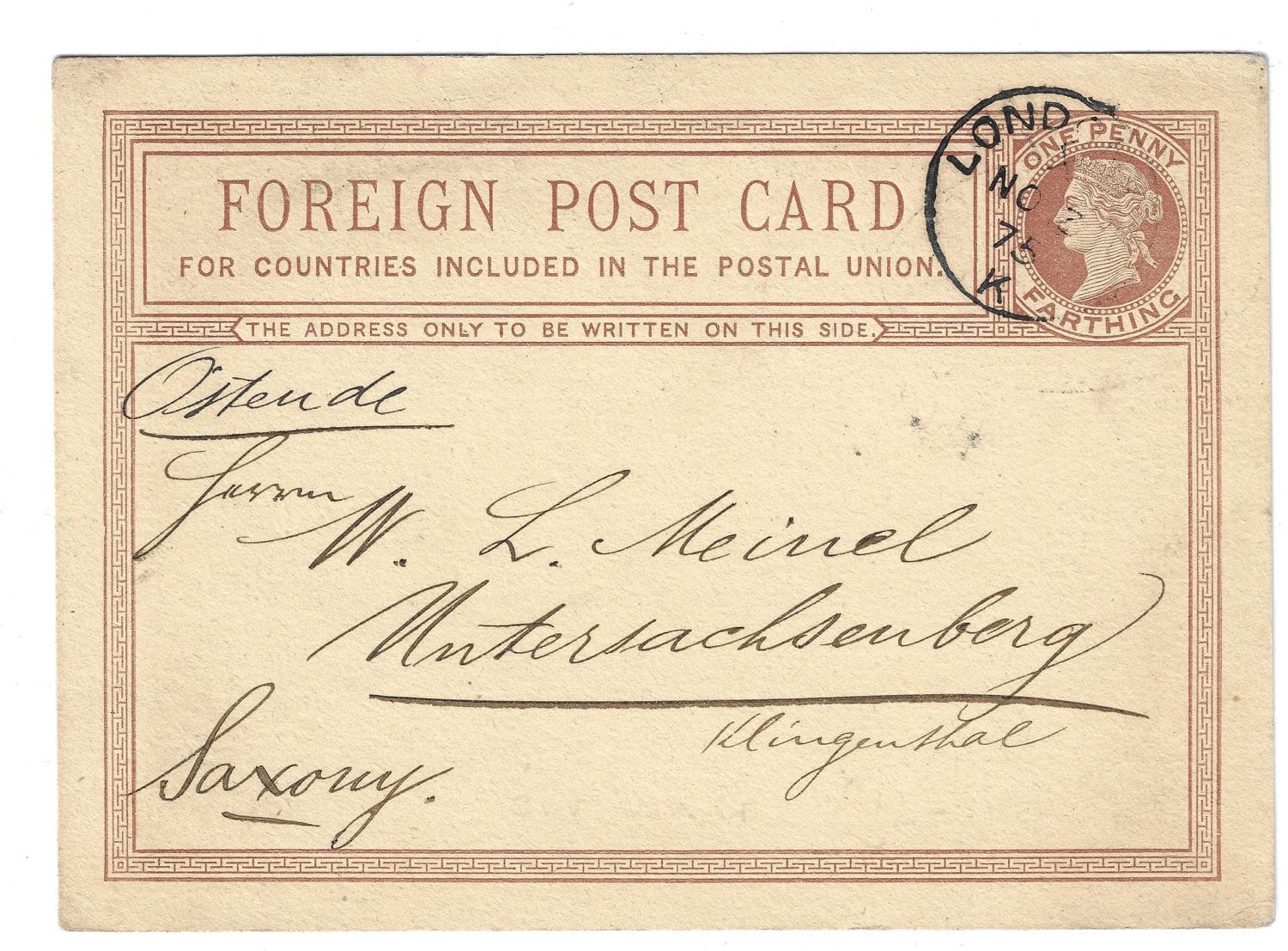
The second half of the 19th century saw an escalation in the speed of travel and also an increasingly literate population. Apart from the sellers of food and shoes it was mainly drapers who accounted for the rapid spread of accessible shops in town and village. Previously in the countryside small domestic items had been bought from the numerous pedlars who went from house to house selling for cash. Even in a village shop, carriage trade customers would have their purchases go on an account as Beatrix Potter explained in The Tale of Ginger and Pickles when ‘Pickles makes a low bow and says “With pleasure, madam” and it is written in a book…...there is no money in what is called the “till”.’ The customer’s gloved hands would not have handled money even if ‘wrapped in paper.’ By the end of the 19th century, there was sufficient social confidence to poke fun at employers, as shown in the immensely popular but often vulgar greetings cards by artist Angus Thomas and the humour shown in Louis Wain postcards (7). The new century brought more confidence in shopping, although the socially insecure could still be faced with the dilemma as to whether to demean oneself by accepting the change. Great Britain never issued any farthing stamps but a curiosity from the 1870s for the collector is the official postal stationery printed to enable postcards to be sent to a foreign country (8).
To mark the Royal Proclamation, there was a brief moment of nostalgia in 1961 when souvenirs, notably a spoon and ‘Genuine Lucky Farthing Knife’ were offered for sale. The final farthings were struck in 1956, but their use was dwindling and the coins ceased to be legal tender after 31 December 1960. Cutlery firms had retained thousands of farthings with the consequent wide variety of souvenirs continuing to be offered today.
The traditional nursery rhyme Oranges and Lemons survives to remind us that the church bells of London ring out with ‘You owe me five farthings, Say the bells of St Martins.’ The farthing coin has now retired but long may it survive in language and literature.
Amoret Tanner
_______________________________________________________________________________________
Select bibliography
Adburgham, Alison. Shops and Shopping 1800-1914. London, George Allen & Unwin, 1964
Adburgham, Alison. Shopping in style. London, Thames and Hudson, 1979
Corina, Maurice. Fine Silks & Oak Counters. London, Hutchinson, 1978
Potter, Beatrix. The Tale of Ginger & Pickles. London, Frederick Warne & Co., 1909
Rickards, Maurice The Encyclopedia of Ephemera. London, The British Library, 2000
Rollins, John G. Needlemaking. Princes Risborough, Shire Publications, 1981
Tanner, Amoret. ‘Angus Thomas’. The Ephemerist Issue 199, Winter 2022
Willis, Frederick. A Book of London Yesterdays. London, Phoenix House, 1960