
The Ephemera of Petroliana

Figure 1. A selection of receipts, 1950s–1990s, from British petrol stations. Most of these brands have now disappeared from our roads.
I was a child who did lots of drawings: fictional maps and landscapes, cars, logos, and, oddly, garages and petrol stations. In one way or another, that early practice led to a later career in design academia, but also a lifetime of collecting particular kinds of ephemera. When I was about 4 years old, I was in the back seat of my mum’s Renault 5 or my dad’s rusty Fiat 131 (both canary yellow), with my younger brother next to me, on a car journey somewhere, and—possibly to stave off the “are we there yet?” pleadings—I was encouraged to spot the brands of the different petrol stations we passed, or filled up at [1], and draw their colourful logos. There were the common ones (close to home, in Devon, we had a couple of Shell garages, an Esso, a BP, a Texaco, and a Jet) but also more unusual ones (nearby villages had Gulf, UK, Butler, Anglo). Some of these were easy to draw (Esso’s oval, with the E written like a back-to-front 3) and others much harder. Ultramar’s golden eagle was a favourite but it was very difficult to draw. I remember on a journey from Devon to Cambridge, when I wasn’t quite 5, seeing an ICI garage with its wavy line logo. A holiday in the Malverns brought brands such as Hunting, Oak, and the enigmatic Van Molen (which has remained something of a ‘white whale’ for me for the subsequent 40 years).
At some point, somewhere, after we filled up with petrol, a forecourt attendant or garage owner gave my parents a hand-written sales receipt with the petrol company logo on it, and I was hooked. Now I had a copy of the logo myself. Other ephemera such as stickers, leaflets, and gift vouchers followed, including from friends and relatives keeping an eye out. I would write letters to petrol companies, send them drawings, and most of the time someone replied, often sending promotional items. In time, my very indulgent parents—and then when I was a bit older, I myself—started taking photos of garages and forecourts, especially the more unusual brands [2].
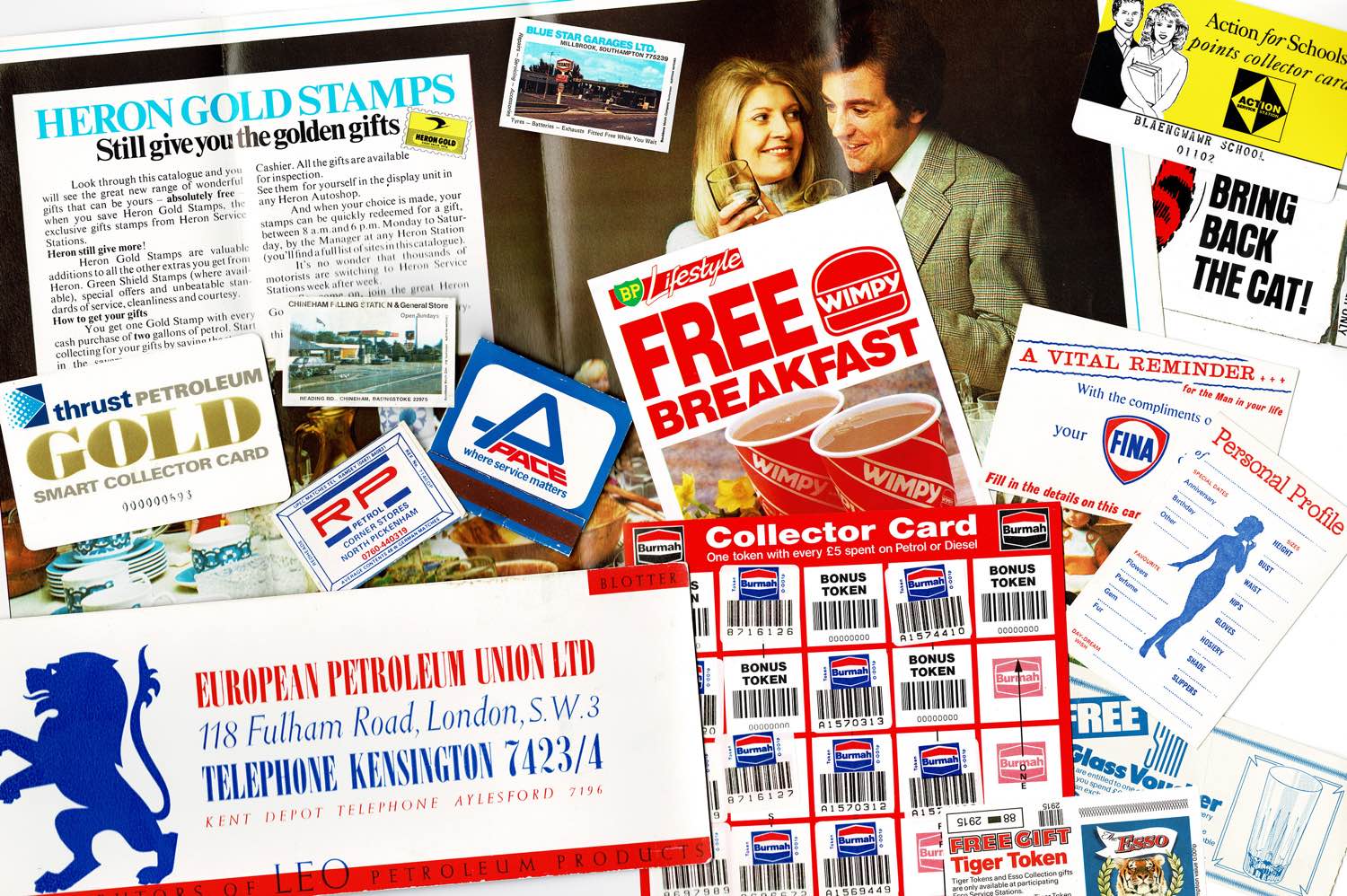
Figure 2. While Green Shield Stamps and Esso’s Tiger Tokens came to dominate petrol station giveaways, there were many other kinds of petrol company ephemera, from matchboxes and stickers to rarer items such as the Leo blotter or Fina ‘personal profile’ card seen here.
‘Petroliana’ collecting is growing in interest in the UK, after having had a much longer popularity in the USA where cultural imaginaries of Route 66, long road trips, and the gas stations and diners on the way are somehow part of the national psyche in a way which is less apparent here. Maybe the turn comes with nostalgia—and awareness of the passing of the petrol pump: even before the mainstream growth in electric vehicles and recognition of the looming disaster of climate change, petrol stations were, very slowly, on their way out, despite oil’s continued violent dominance in global geopolitics. Since a peak in numbers in the mid-1960s, over 75% of the UK’s petrol stations have closed, usually smaller independent businesses (often rural or backstreet garages starting out as blacksmiths or cycle repairers) unviable in an era of supermarket dominance, ownership by large chains, and minimum sales requirements by large suppliers. Latterly many survivors had additional roles as village shops or post offices; financial viability today often depends more on the shop than selling petrol or diesel itself.
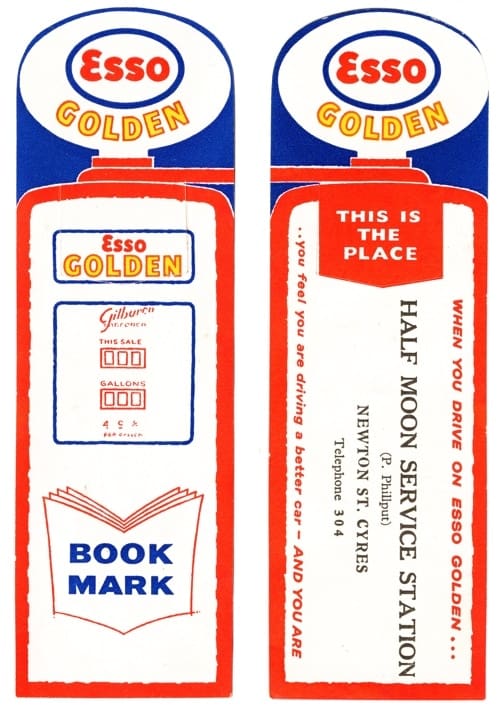
Figure 3. Esso gave away many different promotional items, including stickers, badges, and even tiger tails for cars’ petrol caps as part of their extremely successful ‘Tiger in Your Tank’ campaign from 1965 onwards. But there were also gentler pieces of ephemera such as this bookmark in the form of a Gilbarco petrol pump (there is a tab cut to hook over the page), from a Devon garage around 1960.
Yet most of the collecting is focused on enamel signs, oil and petrol cans, petrol pumps and petrol pump globes (some of which, especially pre-war glass examples, fetch extraordinary amounts of money). The printed ephemera such as receipts, billheads, leaflets, trading stamps, badges, stickers and decals, matchboxes, adverts, magazines, branded maps [3], and so on, do not seem to be especially collectable unless they have some iconic aspect (e.g. Gulf’s associations with motor racing: Fig. 4), or ornate graphic design and typography (e.g. the Power, Fina, and Regent receipts in Fig. 1). Some years ago a 1979 Pace petrol receipt from a garage in Kent, autographed on the back by Paul McCartney, was on eBay for a lot of money, but I was more interested in the Pace side! There is also the aspect noted by Graham Hudson in his blog post about till receipts, and by Julie Anne Lambert in her post about contemporary collecting: many of these kinds of items are just disappearing as a category from everyday life. The advent of thermal paper, then the move to paperless payment, gradually led to the disappearance of interesting receipts; the past couple of decades have however seen a growth in customer loyalty cards (e.g. the 1990s Action and Thrust ones in Fig. 2) and fleet fuelcards from oil companies and larger petrol station operators, which provide another form of modern ephemera in a standard (indeed, internationally standardised) format.

Figure 4. Gulf items can be (mildly) more collectable because of the brand’s motorsport history. Along with the printed items here, the plastic stick-on horseshoes were from a 1967–8 promotion around the ‘extra kick’ of Gulf No-Nox petrol.
I have illustrated this post with a selection of ephemera from my collection, including some less common, or once-common-but-now-forgotten brands. The vast diversity of petrol brands that have been seen on our roads is an underexplored aspect of everyday graphic design and retail history; it is intriguing since the hundreds of brands all represent essentially the same underlying product, packaged in slightly different ways. A full academic history of petrol retailing in the UK through a ‘petrocultures’ lens (including social, cultural, political, and corporate contexts) is overdue; I am slowly working on a corner of the subject: a visually-supported website history of petrol retailing since 1945, including plenty of use of ephemera to illustrate it, which I hope to launch later this year. I like to think that 4-year old me would be excited by the collection I’ve amassed over the years since those first glimpses out of the car window.
If anyone else is interested in this corner of more modern ephemera collecting, please do get in touch — dan@danlockton.co.uk
[1] I have since seen this suggested as a pastime for keeping children quiet on long car journeys, in Motor Sport magazine (May 1967), by editor Bill Boddy.
[2] I’m gradually uploading and documenting these photos on Flickr along with a couple of other people interested in this—the Chris Barker Collection is especially notable.
[3] Ian Byrne’s website is an amazing resource for petrol company maps and their history.