Royal Fireworks – and Fires
While fireworks are an important part of the nation’s commemoration of Guy Fawkes and the Gunpowder Plot on 5 November 1605, they have long been associated with more diverse events, not least royal events and celebrations of peace.One of these remains famous, mainly through its association with George Frederic Handel’s suite ‘Music for the Royal Fireworks’. The music was commissioned by King George II for a celebration in Upper St James’s Park (now Green Park) on 27 April 1749 to mark the end of the War of Austrian Succession and the signing of the treaty in Aix-la-Chapelle. The King also commissioned a lavish Temple of Peace in Palladian style designed by Giovanni Niccolò Servandoni. This rare ticket for the event is in the John Johnson Collection.

Less well known are the circumstances surrounding the composition, the rehearsal and the performance. Handel was not happy with the King’s wish for the elimination of stringed instruments in favour of a militaristic ensemble of brass and woodwind (indeed, a new version with strings by the composer was premiered the same year at the Foundling Hospital) or with the choice of a rehearsal in Vauxhall Gardens. The performance took place before (and, happily as it turned out not simultaneously with) the fireworks.
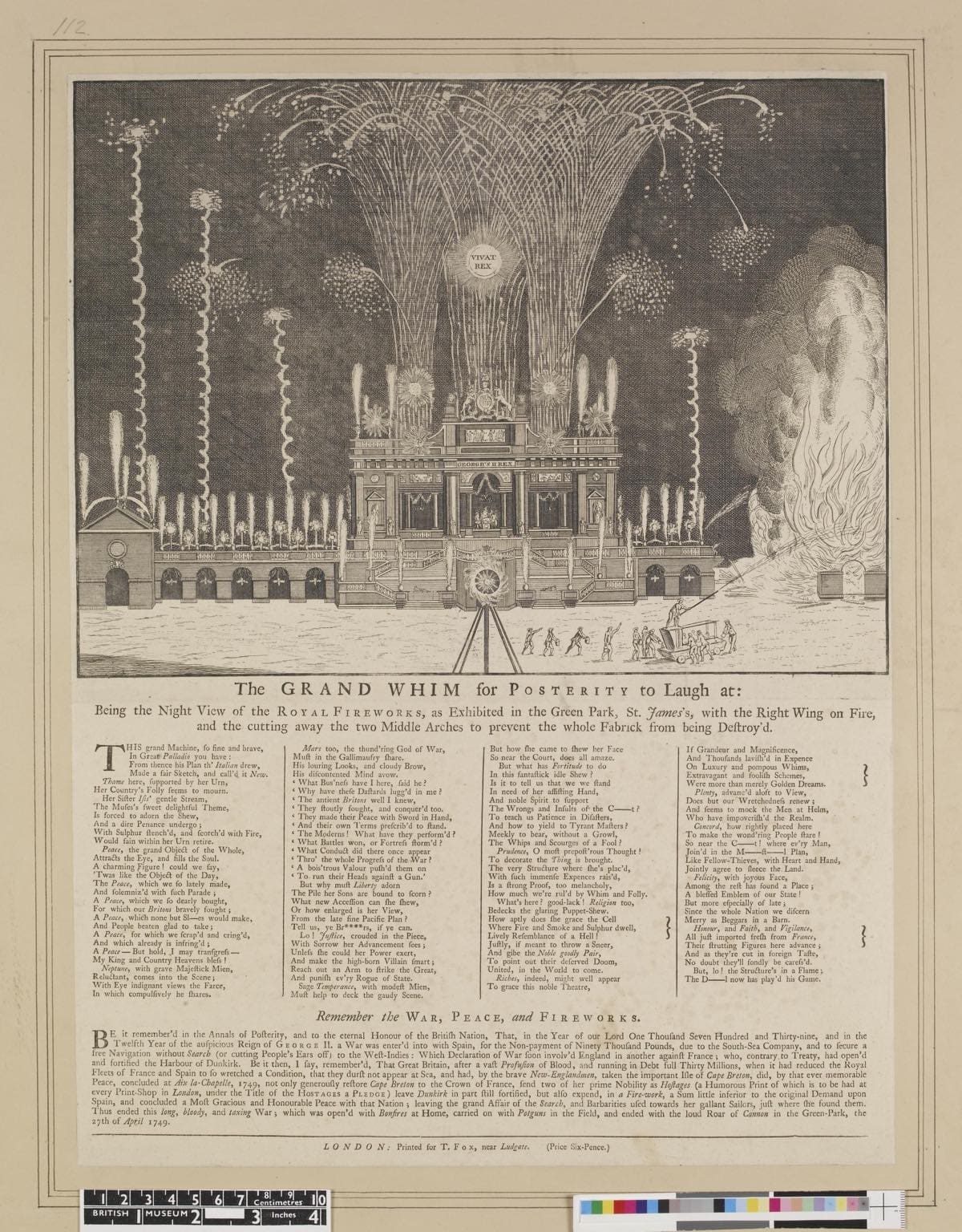
The fireworks were not only disappointing but ultimately disastrous. A misfiring rocket resulted in a fire that destroyed the right wing of the Temple of Peace, near the place recently occupied by the musicians. There were three or four casualties (accounts vary) and the neighbouring Queen’s Library, built for Queen Caroline in the 1730s, was also destroyed.
The British Museum holds a broadside that lampoons both the war itself and the lavish expense of the event in St James’s Park, at a time when British coffers had been depleted by the war. The fire is shown in the engraving and referred to in the last few lines of the verse, which attributes it to the devil as vengeance for men’s folly.
Who would have guessed that history would repeat itself?! The same park, another war, another temple and a pagoda, another firework display to celebrate peace and another fire, this time in 1814.
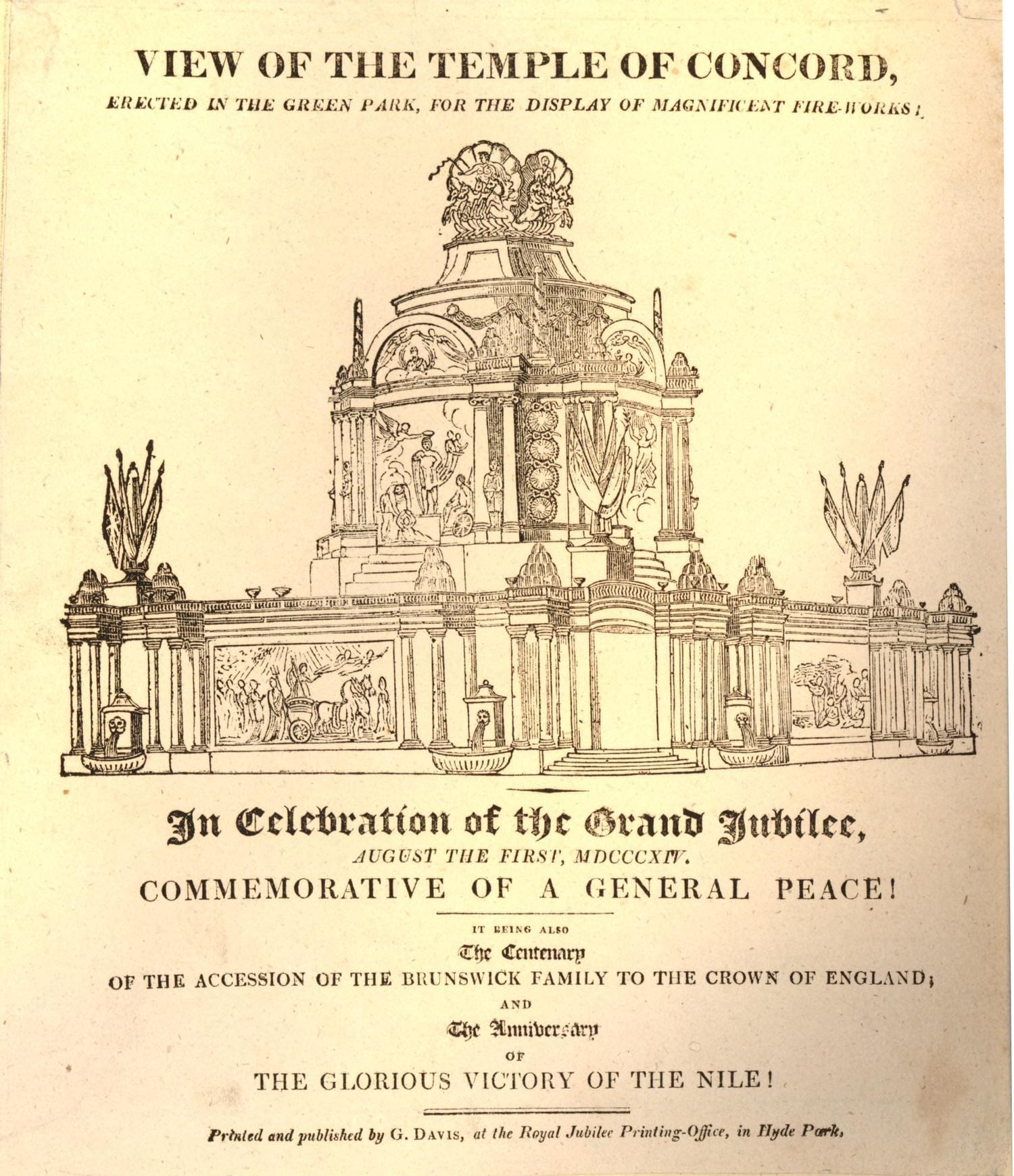
The Grand Jubilee celebrated peace, after the signing of the Treaty of Paris, the centenary of the Brunswick family’s accession to the English throne and the anniversary of the Victory of the Nile. It was celebrated over three days in four parks: St James’s Park, Green Park, Hyde Park and Kensington Gardens, with fireworks in the first two. This popular print encapsulates the events associated with the celebrations, including not only fireworks but also Windham Sadler’s balloon ascent.
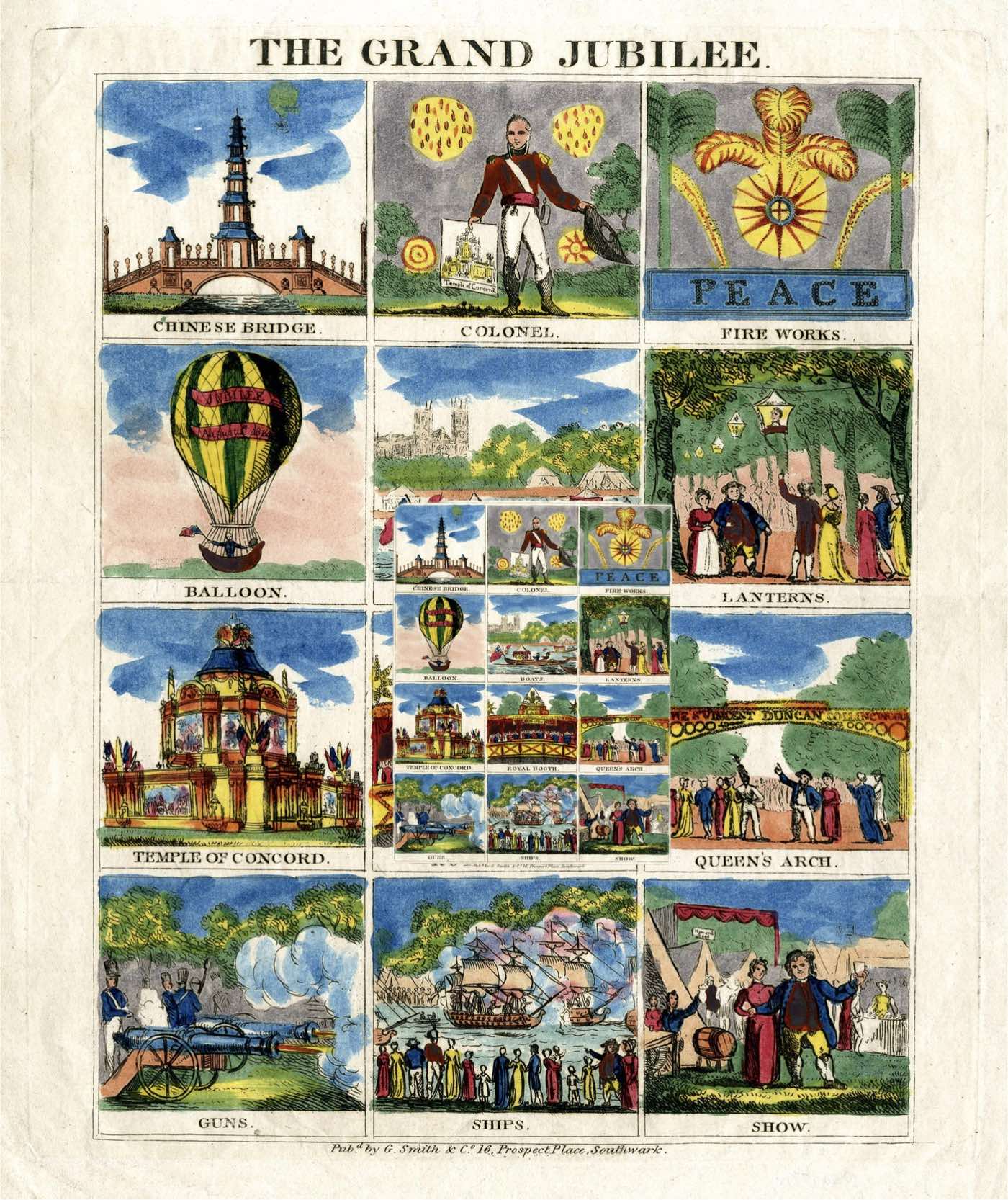
In Green Park, the Temple of Concord, designed by Sir William Congreve (inventor of the Congreve rockets referred to in images 6 and 7), was a rotating structure in the style of a mausoleum with integrated firework apparatus. The temple survived: it was the seven-storey pagoda, designed by John Nash, in St. James’s Park that burned down during the firework display. The temple was dismantled a few months later.
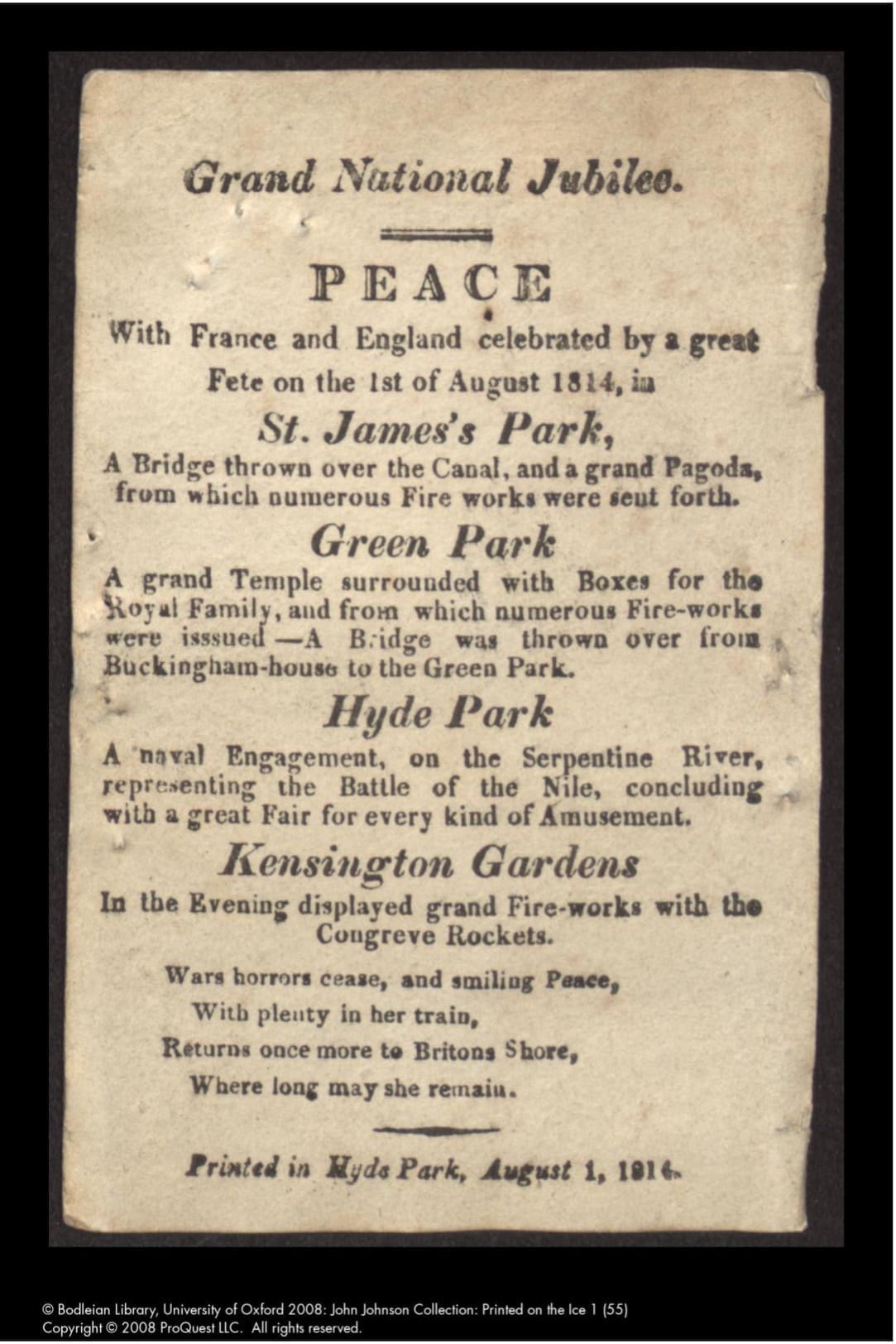
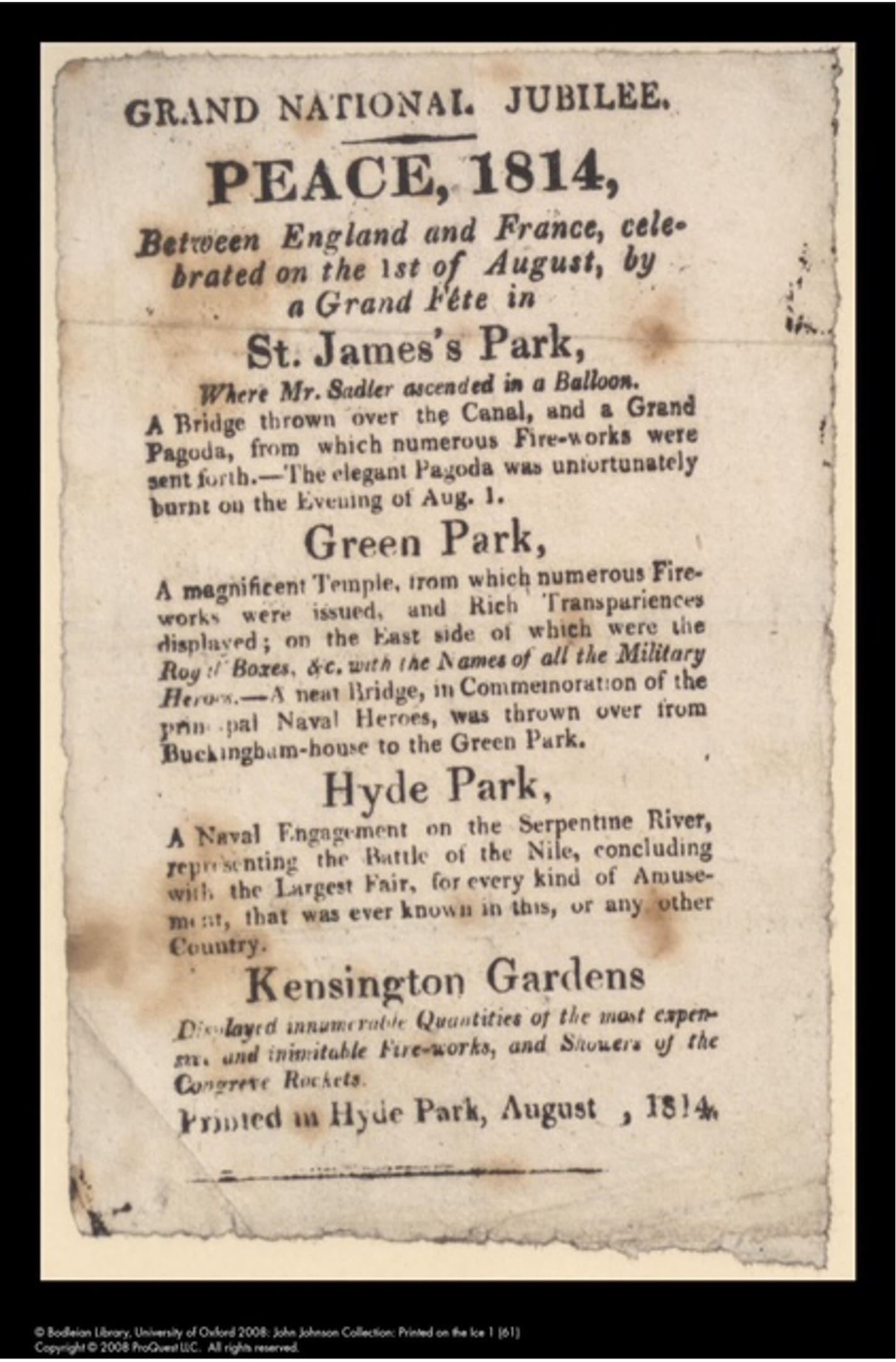
The last three items are keepsakes printed at Hyde Park, in the manner of those printed on the ice during frost fairs. Although all use the past tense, two pre-date the fire, whereas the third must be a day or two later as it states that ‘the elegant Pagoda was unfortunately burnt on the Evening of Aug. 1’.