
Fashion Plates of the Mid-Century
Fashion prints from the 19th century are still moderately priced and offer a wealth of treasure for the collector. Through these delightful sheets of printed paper with their fascinating illustrations as colourful now as on their day of printing over one hundred and fifty years or so ago, we acquire the very essence of how the gentry and nobility displayed affluence through costume. It is not only their decorative qualities that make these little gems so desirable. We see the people at home, in their dressing‑rooms, with their children, at the races, promenading in the grand gardens, at the opera or ball—inside and out, all depicted with great accuracy, charm and grace. Even a moderate collection of this subject will hold undoubted interest to many besides actual collectors.
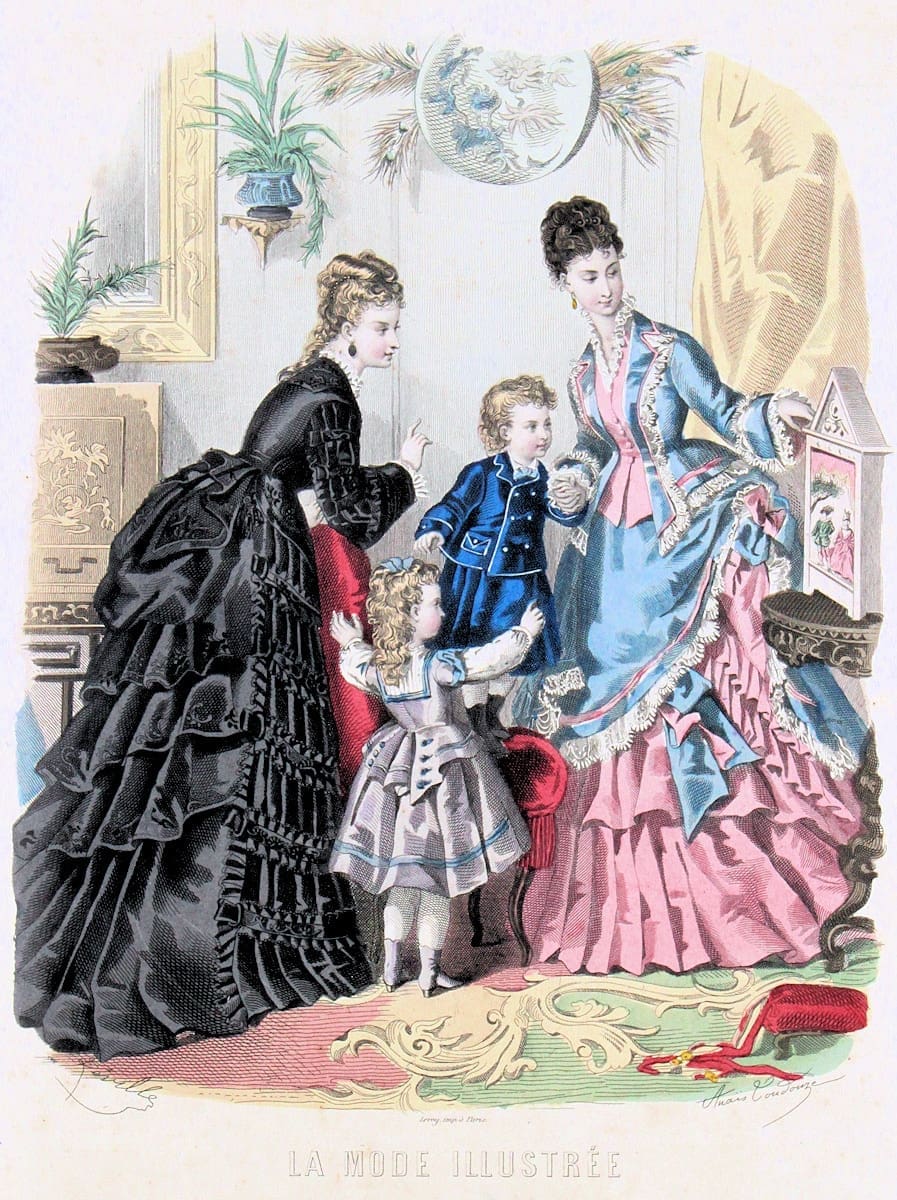
What gives these prints their particular resonance is the way they chart the evolution of taste with such immediacy. The great fashion journals—La Mode Illustrée, Le Follet, La Belle Assemblée, and their many rivals—issued plates weekly or monthly, each one a distilled expression of the latest silhouette, trimming, or textile. The hand‑colouring lends a delicacy and luminosity that mechanical colour printing would not achieve until much later. In many cases, the colourist’s brush adds subtle variations that make each surviving example slightly unique.
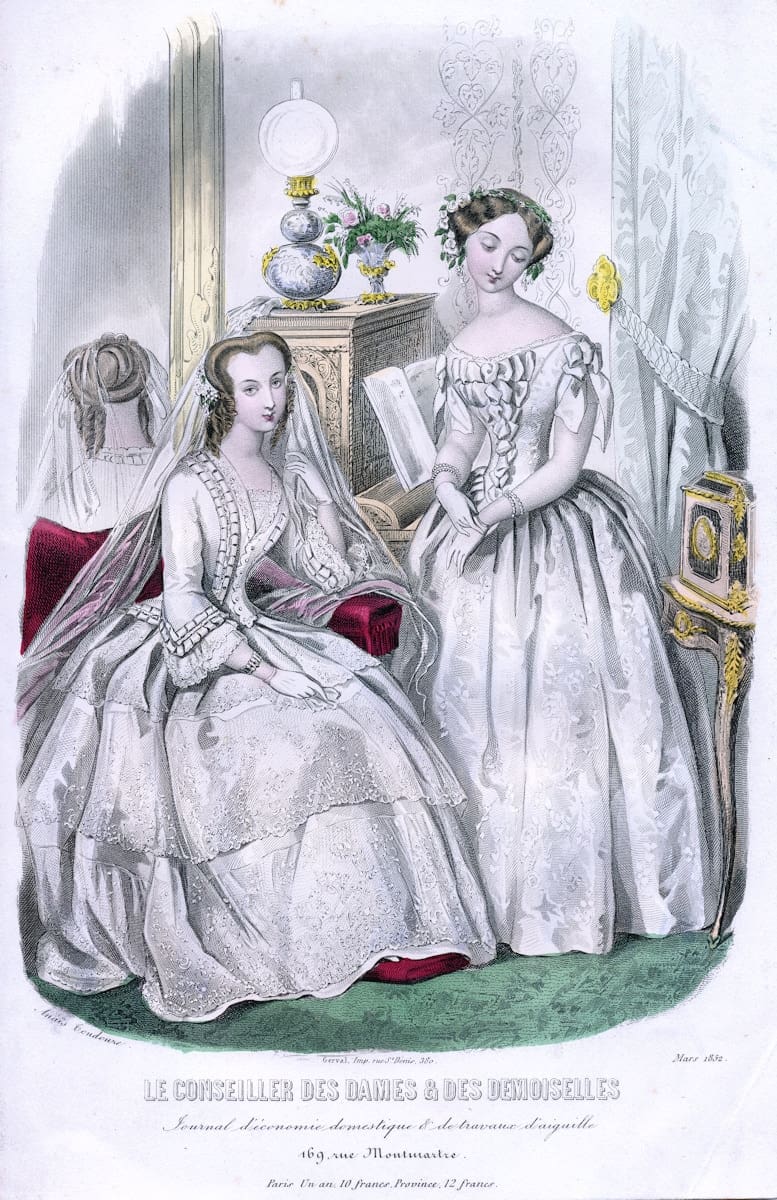
Beyond their aesthetic appeal, these prints serve as a quietly authoritative record of social aspiration. The figures, though idealised, reflect the rhythms of bourgeois and aristocratic life: the morning toilette, the afternoon promenade, the formal visit, the evening entertainment. Accessories—parasols, gloves, reticules, bonnets—are rendered with the same care as the gowns themselves, reminding us how much meaning was once invested in the smallest detail. Even the backgrounds, whether a fashionable interior or a landscaped park, offer glimpses into the material world of the period.
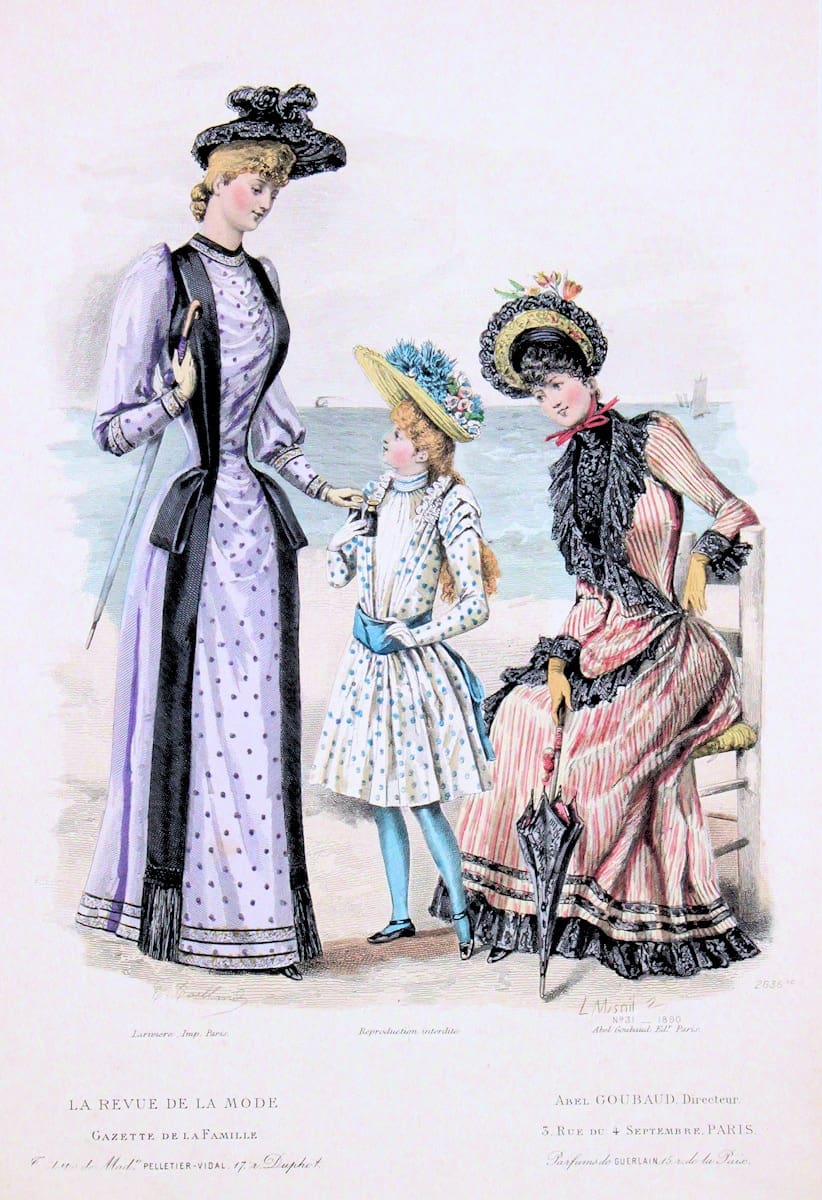
For the modern collector, the field remains refreshingly accessible. While certain plates by celebrated illustrators or from short‑lived journals command higher prices, many fine examples can still be acquired without great expense. Condition, of course, plays a role: crisp impressions, unfaded colour, and clean margins are always desirable. Yet even prints that show gentle signs of handling or album‑mounting possess a charm of their own, bearing witness to the hands that once turned their pages.
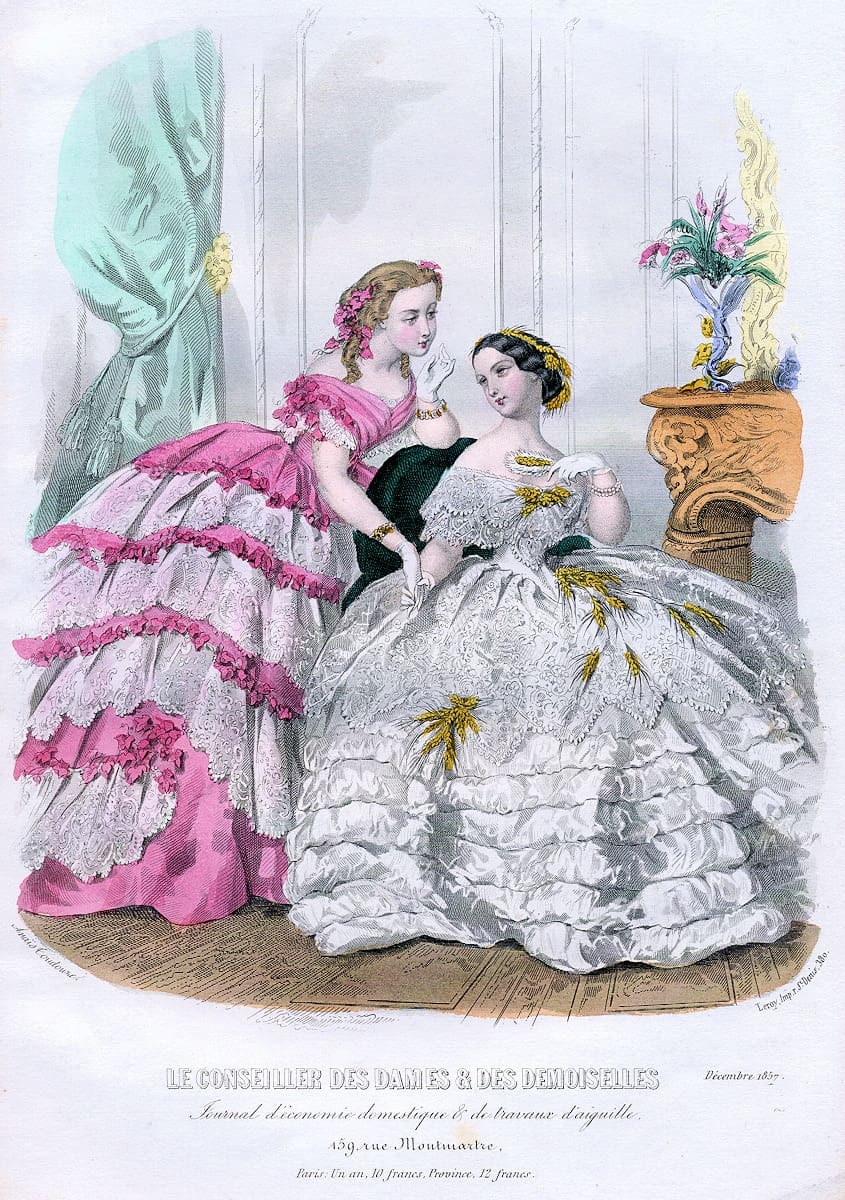
Moreover, these prints lend themselves to thematic collecting. One might focus on the Romantic era’s high waists and flowing lines; the exuberant crinolines of the 1850s; the sculptural bustles of the 1870s; or the refined tailoring of the fin‑de‑siècle. Others may prefer to gather examples by a particular illustrator, or to trace the output of a single journal across several decades. Whatever the approach, the result is a visual narrative of fashion’s constant reinvention.