
Articles
Free from …

Absolutely non-poisonous’. This charming late Victorian advert for Aspinall’s Neigeline promises velvety skin in any weather. [Fig. 1]. © Bodleian Libraries, University of Oxford. John Johnson Collection: Beauty Parlour 3 (34), recto. 1896, 21.0 x 13.4 cm. Today, whole sections of supermarkets are dedicated to ‘free from’ products. In the 19th century the phrase was…
Read moreForms of Death

Remember to Die… And bring this Ticket with you Dr Dennis Duncan is Associate Professor in English Language and Literature at University College London, and author of a best-selling book: Index, a History of the. Dennis’s next book will be on ephemera. Dennis is a member of The Ephemera Society and, in August, was the first…
Read moreThe Piano Girl

Another post on a single item of ephemera, this time bought at the Society’s Ephemera Fair in May 2026. I am not a collector, but every so often an item appeals to me. In this case, although I was familiar with images of organ grinders and fair organs, and with later player pianos, the idea…
Read moreCoping with the heatwave – in the 1830s
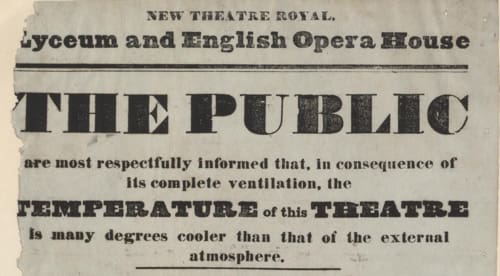
© John Johnson Collection, Bodleian Libraries, University of Oxford: Lyceum box 1 (62) We recently distributed questionnaires at our Ephemera Fair and were delighted to receive constructive feedback. One visitor suggested that blog posts on a single item of ephemera would be easier for working members to write, so here to start the ball rolling…
Read moreYour Change with Thanks

– but nobody cared a farthing when its reign came to an end Amoret Tanner writes about a little-known but fascinating area of ephemera. The handling of farthing coins was considered vulgar by genteel customers, even with gloved hands. Two principal solutions were found: change packets, where the coin was concealed in a pre-printed envelope,…
Read moreFashion Plates of the Mid-Century
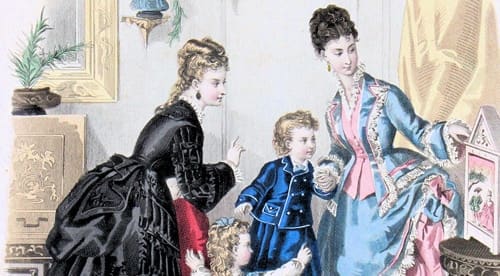
Fashion prints from the 19th century are still moderately priced and offer a wealth of treasure for the collector. Through these delightful sheets of printed paper with their fascinating illustrations as colourful now as on their day of printing over one hundred and fifty years or so ago, we acquire the very essence of how…
Read moreThe Ephemera of Petroliana

Figure 1. A selection of receipts, 1950s–1990s, from British petrol stations. Most of these brands have now disappeared from our roads. I was a child who did lots of drawings: fictional maps and landscapes, cars, logos, and, oddly, garages and petrol stations. In one way or another, that early practice led to a later career…
Read moreMusings on Collecting the Present

One of my favourite quotations is this, from John Selden’s Table Talk (published posthumously in 1689): “Though some make slight of libels, yet you may see by them how the wind sits: as, take a straw, and throw it up into the air, you shall see by that which way the wind is, which you shall not…
Read moreThe Cruel, Comic, and Curious World of 19th Century Valentines
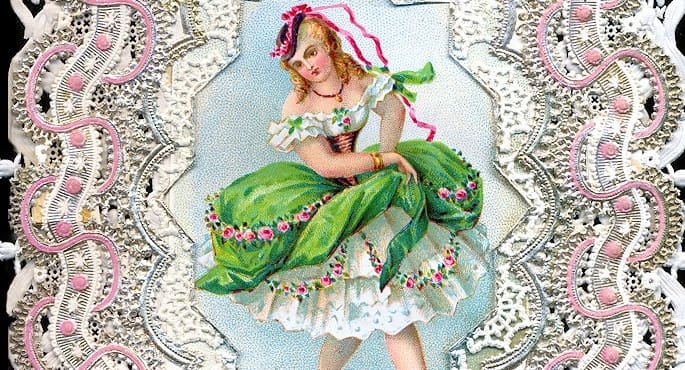
In mid-Victorian England, the custom of sending valentines was widely understood as an exchange of daintily printed cards between special loving friends— lace-paper confections overflowing with hearts, cupids, flowers and tender verses. These sentimental tokens spoke of affection, admiration and the soft glow of romance. Yet beneath this sweet exterior lurked something far more sinister:…
Read moreThe Ephemera of the Twelfth Cake
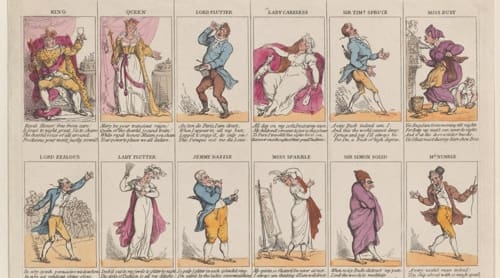
For centuries, the twelfth cake was a central part of English secular celebrations of Epiphany. Twelfth cakes and the festivities surrounding them are amply documented: in diaries (including those of Samuel Pepys and Queen Victoria), books, journals, newspapers and in literature.[1] They are also intrinsically linked to a surprisingly diverse range of ephemera. Originally leavened,…
Read more